Glass Neon Signs San Francisco
San Francisco Signs & Graphics builds hand-blown glass neon for storefronts, bars, restaurants, and interior brand signs. This page explains what real glass neon is, how it’s made, and when it’s the right choice. For a broader look at design options, sizing, and examples, see our custom neon signs page.

What “Glass Neon” Means
Glass neon signs are made from continuous glass tubing that is heated and bent into shape by hand. After bending, the tube is processed and sealed so the light stays consistent.
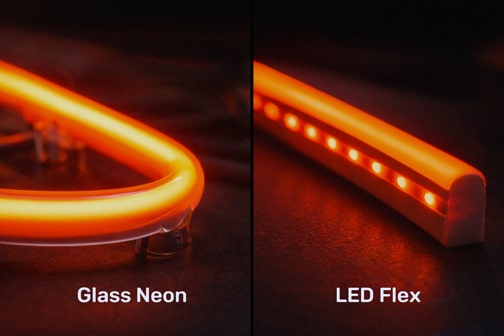
This is different from LED “neon flex,” which uses a light strip inside a diffuser. Glass neon produces a smoother glow and a classic neon look that many businesses still prefer.
Why customers choose glass neon:
- Smooth, continuous light with no hotspots
- Deeper color and a classic neon appearance
- Repairable—sections can often be serviced
- Works well for indoor and outdoor signage

Hand-Blown Fabrication
Glass neon starts with a layout and a pattern. Tubing is heated until it becomes flexible, then bent to match the design. Clean spacing and alignment matter because the sign needs to read from the street.
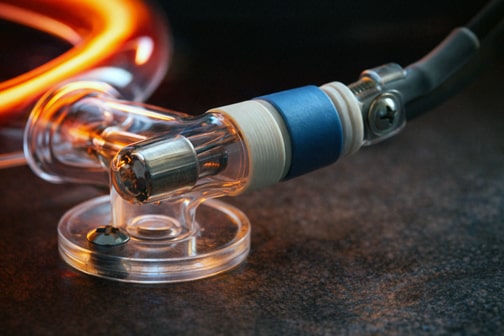
After shaping, the tube is processed and sealed. This step affects stability, brightness, and long-term performance. It’s also where quality differences show up between real fabrication and mass-produced alternatives.
Fabrication details:
- Custom tube bends matched to final artwork
- Processed tubing for consistent illumination
- Mounting layout built for readability
- Power supply sized to the sign and location
- Built for indoor installs or weather exposure

Light Quality and Color
Glass neon produces light along the full length of the tube. That continuous glow is what makes neon look clean at night and consistent in low-light interiors.
Color depends on the tube, coatings, and how the sign is built. When the layout is done correctly, the sign stays readable, photographs well, and looks consistent from multiple angles.
Best use cases:
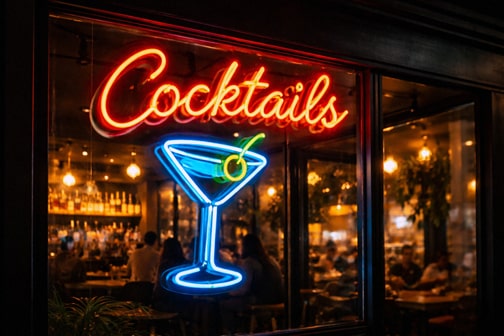
- Restaurants and bars with night foot traffic
- Theaters, venues, and entertainment districts
- Retail storefronts that need distance readability
- Interior brand signs behind service counters
Common Applications
Glass neon is a strong fit when the sign needs to feel authentic and permanent. The best approach depends on placement, viewing distance, and the environment.
Indoor installs often use clean backing panels and hidden wiring. Outdoor signs may need additional protection depending on exposure and mounting location.
Popular requests:
- Storefront name signs and “open” signs
- Bar and restaurant feature signs
- Interior logo signs for lobbies and counters
- Directional neon for venues and events
- Custom shapes, icons, and short phrases
Glass Neon vs LED
LED neon flex can be practical for some installs, but it does not produce the same light as glass. Glass neon uses continuous tubing, which creates a smoother glow and a more traditional appearance.
Serviceability is another difference. With glass neon, certain issues can often be repaired by replacing sections. With many LED products, failures often require replacing the affected run.
When glass neon is the better choice:
- You want the classic neon look (not an LED substitute)
- The sign needs strong night visibility and depth
- Long-term repairability matters
- This is a permanent brand fixture
Glass Neon FAQs
How are custom glass neon signs made?
Design is mapped to a pattern, then tubing is heated and bent by hand. The tube is processed, sealed, mounted, and wired for the final install.
Can glass neon signs be repaired?
Often, yes. Depending on access and design, sections can be serviced or replaced along with the power supply if needed.
Are glass neon signs suitable for outdoor use?
They can be, but the install needs proper mounting and electrical protection based on exposure and placement.
Why does glass neon look different than LED neon flex?
Glass neon glows along continuous tubing. LED neon flex uses a light strip inside a diffuser, so the light quality and depth are different.
Request a Glass Neon Quote
Share your design (or the wording), approximate size, and where the sign will be installed. We’ll respond with clear options and a straightforward next step.